Smoked Brisket Pizza: A Leftovers Recipe
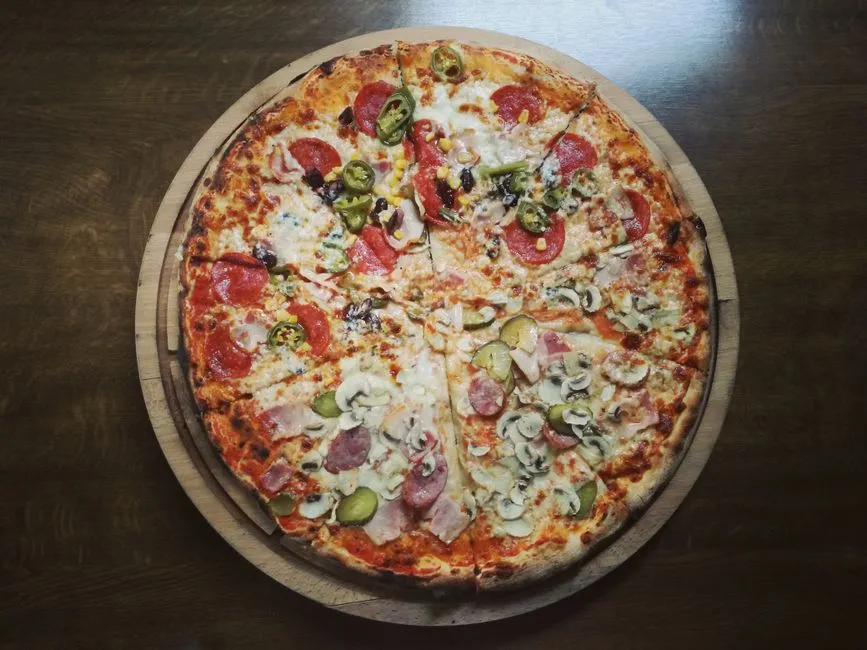
- A leftovers pizza with a measured smoke budget
- Ingredients for one 12-inch pizza
- The faster BBQ brisket pizza route
- Start with safely stored brisket
- Mix and fold the dough
- Warm and shape without rolling out the gas
- Balance the sauce before topping
- Bake by crust and centre temperature
- Rest on a rack and finish fresh
- Same-day dough when leftovers cannot wait
- Grill it with a lighter load
- Refrigerate with the original clock in mind
- Sources
A leftovers pizza with a measured smoke budget
This 12-inch brisket pizza uses 180 grams fully cooked smoked brisket, a 120-gram blend of barbecue sauce and tomato, mozzarella, cheddar, red onion, and drained pickled jalapeño. The dough is 65% hydration: 300 grams flour and 195 grams water, cold-fermented for 12–48 hours.
Bake it on a thoroughly preheated steel or rated pizza stone at 500°F (260°C) for about 8–12 minutes. The crust should be browned underneath and set through the centre; the cheese should bubble; and the leftover brisket should reach 165°F (74°C).
This recipe is not a place to hide dry meat beneath a syrupy sauce duvet. It is a way to give properly stored leftovers a second meal while keeping crust, smoke, acid, and cheese in conversation.
Ingredients for one 12-inch pizza
Dough
| Ingredient | Weight | Baker's percentage |
|---|---|---|
| Bread flour | 300 g | 100% |
| Cool water | 195 g | 65% |
| Fine salt | 6 g | 2% |
| Instant yeast | 1 g | 0.33% |
| Olive oil | 9 g | 3% |
The dough weighs 511 grams. Hydration is 195 ÷ 300 × 100 = 65%. Use a scale that can read tenths of a gram for the yeast.
Sauce and toppings
| Ingredient | Weight | Preparation |
|---|---|---|
| Thick barbecue sauce | 60 g | Taste before using |
| Plain crushed tomato | 60 g | Drain briefly if watery |
| Low-moisture whole-milk mozzarella | 180 g | Grated |
| Mild or medium cheddar | 60 g | Grated |
| Fully cooked smoked brisket | 180 g | Small pieces, hard fat trimmed |
| Red onion | 40 g | Very thinly sliced |
| Pickled jalapeño | 30 g | Drained and blotted |
| Fine cornmeal or semolina for peel | 10–15 g | Use only what releases the dough |
| Fresh coriander, optional | 10 g | Add after baking |
Cheese, sauce, cured ingredients, and brisket all contribute salt. Do not add extra salt to the toppings before tasting them together.
The faster BBQ brisket pizza route
Scratch dough gives the most control, but bought dough or a prebaked crust can turn properly stored brisket into dinner without pretending Tuesday is a fermentation retreat.
| Base | Preparation | What stays the same |
|---|---|---|
| Homemade cold-fermented dough | Use the complete 511-gram formula below | The 12-inch topping quantities, peel test, doneness cues, and 165°F (74°C) brisket endpoint |
| Fresh prepared pizza dough | Choose a package intended for about one 12-inch pizza; follow its thawing, refrigeration, and room-temperature directions | Use the topping quantities as caps, then judge stretch and bake by the package and visual cues |
| A 12-inch prebaked crust | Follow its package for pan, rack, temperature, and whether any pre-bake is required | Keep the sauce thin, use fully cooked brisket, and verify the centre and meat are hot enough |
A purchased base does not override its instructions. For a smaller stated size, reduce the toppings; for a larger one, make another pie rather than overstretching unfamiliar dough.
Build the faster version in five steps
- Preheat the oven and approved pan, stone, or steel exactly as the dough or crust package and equipment manufacturer direct.
- Mix 60 grams barbecue sauce with 60 grams crushed tomato. Barbecue sauce is an excellent guest and a terrible landlord, so keep the layer measured.
- Cut 180 grams fully cooked brisket into small pieces; reserve 20 grams sauce mixture for it only if dry.
- Add 120 grams mozzarella, brisket, onion, drained jalapeño, the remaining 60 grams mozzarella, and 60 grams cheddar.
- Bake until the base is browned, the centre is set, the cheese bubbles, and several central brisket pieces reach 165°F (74°C) with a suitable clean thermometer.
Prepared dough saves time, but it does not reset the brisket’s storage clock or remove the raw-flour rule.
Start with safely stored brisket
Use brisket that was fully cooked, handled with clean tools, and refrigerated within two hours—or one hour if the surrounding temperature was above 90°F (32°C). USDA advises using cooked leftovers within 3–4 days. Its leftover food-safety guidance also calls for reheating leftovers to 165°F (74°C).
The pizza does not reset that storage window. USDA’s current meal-kit safety page says to use or freeze leftovers within four days of when they were first cooked. If the brisket was cooked three days ago, the finished pizza is still built on three-day-old meat. Refrigerate and eat it within the original window.
Cut chilled brisket across the grain into pieces no larger than about 2 centimetres. Trim hard, waxy fat but keep tender rendered portions. If the meat is dry, toss it with 20 grams of the measured sauce mixture or a spoonful of reserved, safely stored, defatted cooking juice.
Do not use the pizza bake to finish undercooked brisket. Keep raw-meat boards, knives, juices, and hands away from cooked brisket, cheese, sauce, and dough.
Mix and fold the dough
Put the water in a medium bowl. Add the instant yeast, flour, salt, and 9 grams olive oil. Stir with a sturdy spoon or damp hand until no dry flour remains. Cover and rest for 20 minutes.
With a wet hand, lift one edge of dough, stretch gently, and fold it over the centre. Turn the bowl and repeat on all four sides. Rest for 15 minutes and complete another round of four folds. The dough should become smoother and more elastic.
Cover tightly and refrigerate for 12–48 hours. Refrigerator temperature and yeast activity change the pace. Use the dough earlier if it inflates dramatically and begins to collapse.
Flour is raw food and may carry harmful bacteria. FDA advises against tasting raw dough; wash hands, bowls, utensils, and counters after they contact raw flour. The agency’s flour safety page gives the required handling and cleaning steps.
Warm and shape without rolling out the gas
Take the dough from the refrigerator 90–150 minutes before baking. Form it into a smooth ball without tearing, cover, and let it relax at room temperature. It is ready to stretch when it is supple, slightly puffy, and no longer snaps back immediately.
Set a pizza steel or pizza stone on a rack in the upper-middle or centre position, following the surface manufacturer’s heat and placement instructions. Preheat the oven to 500°F (260°C) for at least 45–60 minutes. Confirm the stone or steel is rated for the oven and temperature. Never put a cold or damp stone into a hot oven.
Dust a peel lightly with cornmeal or semolina. Press the dough from the centre outward, leaving a 1–2 centimetre rim. Lift and stretch over the backs of your hands until about 12 inches across. Do not crush the rim or create a paper-thin centre.
Set the dough on the peel and shake gently. It should move as one piece. If it sticks, lift the edge and add a pinch more release flour. Do not let stretched dough sit loaded on the peel; moisture and time increase sticking.
Balance the sauce before topping
Mix 60 grams barbecue sauce and 60 grams plain crushed tomato. Taste it. It should be smoky and tangy without leaving a heavy sugar film. If too sweet or smoky, replace 15 grams mixture with 15 grams more tomato. If too thin, simmer the mixture briefly and cool it completely before assembly.
Our barbecue sauce on pizza guide includes ratios for sweeter, sharper, thinner, and undiluted sauces. The 1:1 version is the most balanced starting point here because brisket and cheddar already speak loudly.
Reserve 20 grams sauce mixture for dry brisket if needed. Spread the remaining sauce over the dough, preserving the bare rim. Scatter 120 grams mozzarella, then the brisket, onion, and jalapeño. Finish with the remaining 60 grams mozzarella and all 60 grams cheddar.
Tucking some brisket beneath cheese protects it from direct oven heat. Leaving some visible gives browned edges. Drain the jalapeño and slice onion thinly so neither creates a wet, raw layer.
Shake the peel again. If one area sticks, lift and dust just that spot. Launch onto the hot surface in one decisive movement.
Bake by crust and centre temperature
Bake for 8–12 minutes. Turn the pizza once if the oven browns unevenly, using a peel and keeping hands clear of the hot surface.
Check for all four signals:
- the rim is expanded and browned;
- the underside has dark golden spots and supports the slice;
- the centre dough looks set, not glossy or gummy;
- a clean thermometer inserted into the thickest brisket area reads 165°F (74°C).
Avoid touching the stone or steel with the thermometer probe. If the crust is ready before the meat reheats, loosely cover the darkest edge with foil, lower the oven to 450°F (230°C), and continue briefly. Next time, cut the brisket smaller or use less.
If the cheese darkens before the base, move the oven surface lower on the next bake or preheat longer. If the base burns first, place the surface higher or reduce the oven temperature after launch. Ovens and baking surfaces vary, so treat the timer as a checking window.
Rest on a rack and finish fresh
Transfer the pizza to a wire rack for three minutes. The rack releases steam; a flat board immediately softens the bottom. Move to a board, scatter coriander if using, and cut into six or eight slices.
Taste before adding anything. If the pie feels heavy, a few chopped pickles or drops of lime after baking add acid. If it feels sufficiently spicy, do not add hot sauce for decorative machismo.
This combination is one example of Texas-influenced pizza, not a claim that every Texas pizzeria follows the formula. The regional character comes through the brisket, sauce, chile, and balance; the crust remains happily employed as pizza.
Same-day dough when leftovers cannot wait
Increase instant yeast from 1 gram to 2 grams. Mix and fold as written, then cover at room temperature until expanded by roughly half and visibly bubbly, commonly 2–4 hours depending on dough and room temperature. Shape into a ball and rest 45–75 minutes before stretching.
Watch the dough rather than forcing the longest clock time in a hot kitchen. If it becomes very loose and fragile, use it sooner. Do not add a spoonful of yeast to make the schedule “extra same-day”; that changes flavour and handling far beyond the measured formula.
The cold-fermented version is easier to schedule and develops more flavour. Use the same-day version when waiting until tomorrow would push the brisket beyond its original storage window.
Grill it with a lighter load
For a grill, divide this dough into two portions of about 255.5 grams and follow the two-zone grilled method. Make two 10-inch pizzas. Per pizza, use no more than 60 grams sauce, 100 grams total cheese, 75–80 grams brisket, 15 grams onion, and 10–15 grams jalapeño.
Cook the first side bare over direct heat, flip onto indirect heat, top quickly, and close the lid. Keep sauce off the grates. Confirm the leftover brisket reaches 165°F (74°C) without burning the crust.
Do not put the full 12-inch topping load on the smaller grilled rounds.
Refrigerate with the original clock in mind
Move leftover pizza into a shallow covered container and refrigerate within two hours, or within one hour above 90°F (32°C). Use within the brisket’s original 3–4-day cooked-leftover window. Reheat to 165°F (74°C).
A skillet over moderate heat can recrisp the base; cover only briefly to warm the centre, then uncover so steam escapes. An oven at 375°F (190°C) also works. Exact time depends on slice thickness and starting temperature, so measure the centre.
When storage history is unclear, discard the meat and pizza without tasting them. Smell, smoke, spice, and appearance cannot establish that leftovers are safe.