Grilled Pizza: A Two-Zone Method That Holds Up
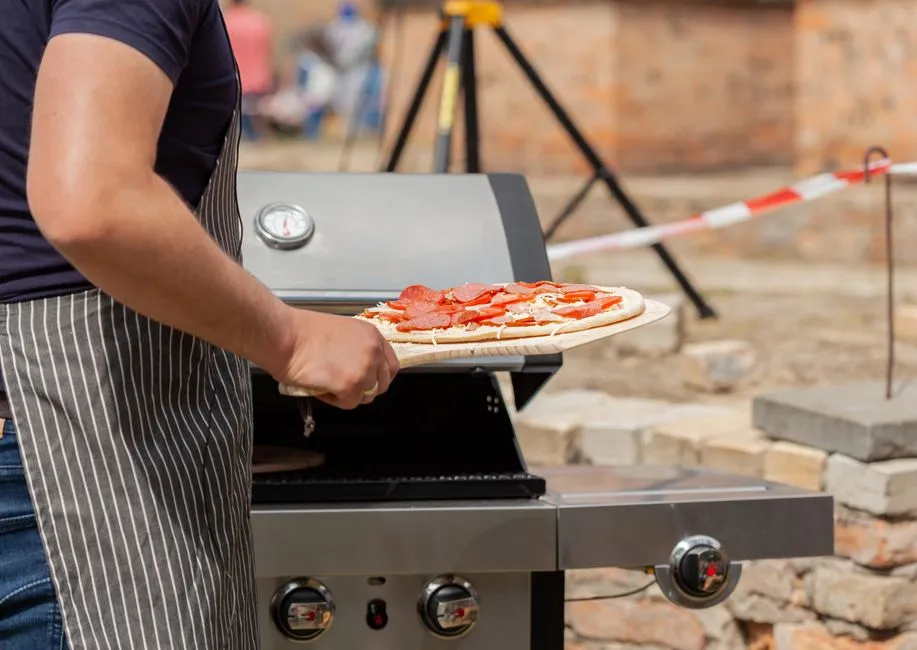
- Direct heat sets the dough; indirect heat finishes dinner
- Ingredients for two 10-inch pizzas
- Mix a same-day dough
- Build two genuinely different heat zones
- Clean and prepare the grate safely
- Prepare every topping before dough touches heat
- Stretch on oiled trays, not in mid-air beside flame
- Grill the first side bare
- Top lightly and close the lid
- Three topping plans that fit the limits
- Troubleshoot by the side that failed
- Serve, cool, and shut down safely
Direct heat sets the dough; indirect heat finishes dinner
Grill pizza with two heat zones: a direct side for setting and marking the first bare-dough surface, and an indirect side for melting toppings without incinerating the base. Divide this 512-gram, 65% hydration dough into two 256-gram balls and stretch each to about 10 inches.
Preheat a clean, covered grill to roughly 450–500°F (232–260°C). Grill the first side for 2–3 minutes over direct heat, flip onto indirect heat, add no more than 60 grams sauce and 100 grams cheese, close the lid, and finish for about 3–6 minutes.
Grills have hot spots, lid thermometers have opinions, and wind gets a vote. Use the time as a checking window. A crisp but unburnt base, set center, melted cheese, and safely heated toppings decide when the pizza leaves.
Ingredients for two 10-inch pizzas
Dough
| Ingredient | Weight | Baker's percentage |
|---|---|---|
| Bread flour | 300 g | 100% |
| Cool water | 195 g | 65% |
| Fine salt | 6 g | 2% |
| Instant yeast | 2 g | 0.67% |
| Olive oil | 9 g | 3% |
Total dough weight is 512 grams: 300 + 195 + 6 + 2 + 9. Divide it into two 256-gram portions. Hydration is 195 ÷ 300 × 100 = 65%.
Handling and toppings
| Ingredient | Total for two | Per pizza maximum |
|---|---|---|
| Olive oil for trays and dough | 20 g | 10 g |
| Thick sauce | 120 g | 60 g |
| Low-moisture mozzarella | 200 g | 100 g |
| Fully cooked, drained toppings, optional | Up to 160 g | Up to 80 g |
| Fresh finishing herbs, optional | 10 g | 5 g |
Small pizzas are easier to move and turn than one large round. Resisting the urge to grill a hubcap on your first attempt is a sign of maturity.
Mix a same-day dough
Put the water in a medium bowl and add yeast, flour, salt, and 9 grams olive oil. Stir until no dry flour remains. Cover and rest for 20 minutes.
With a wet hand, stretch one side and fold it over the center. Turn the bowl and repeat on all four sides. Rest for 15 minutes, then complete another four folds. Cover and rise at room temperature until expanded by roughly half and visibly bubbly, commonly 2–4 hours depending on conditions.
Turn the dough onto a lightly oiled surface and divide into two 256-gram portions. Shape each into a ball, cover, and rest 45–75 minutes until relaxed enough to stretch without snapping back.
Do not taste raw dough. Flour is a raw food and can contain harmful bacteria. FDA’s raw flour guidance advises cooking flour-containing food and cleaning hands, tools, and surfaces after contact.
For cold fermentation, reduce instant yeast to 1 gram, refrigerate the covered dough for 12–48 hours after folding, then divide into two portions of about 256 grams each and warm them for 90–150 minutes before grilling.
Build two genuinely different heat zones
For a gas grill, preheat all burners according to the manufacturer’s instructions, then turn one side to medium or medium-high and the other side off or very low. Burner arrangement varies; the goal is a hot grate area and a cooler area where food cooks mostly with the lid’s retained heat.
For charcoal, light fuel using a manufacturer-approved method and arrange the ready coals on one side, leaving the other side without coals. Fit the cooking grate and preheat with the lid on and vents positioned as the grill manual directs.
Aim for roughly 450–500°F (232–260°C) on the covered thermometer. That reading is a reference, not a map of the grate. Test a small scrap of dough if this grill is unfamiliar.
Use the grill outdoors in a well-ventilated location with the required clearance from buildings, roofs, dry vegetation, and combustibles. Never use a charcoal or gas grill inside a house, garage, tent, vehicle, or other enclosed or partly enclosed space; carbon monoxide can kill without warning. Follow local fire restrictions and the equipment manual.
Clean and prepare the grate safely
Preheat, then clean the grate with a method approved by its manufacturer. If using a bristle brush, inspect carefully for loose wires; manufacturer-approved bristle-free tools reduce that hazard. Wipe a thin film of high-heat oil onto the grate with long tongs and a folded towel only if the manual permits, keeping hands, sleeves, and oil away from flame.
Do not spray aerosol oil toward a lit grill. Do not pour oil onto hot grates. Keep the lid open when lighting as directed, and never add liquid starter to lit coals.
Have a fire extinguisher appropriate to the fuel accessible and know how to shut off gas safely. For a persistent flare or suspected gas leak, turn off the source only if safe, move away, and contact emergency services. Water is not the universal answer to fuel or grease fire.
Prepare every topping before dough touches heat
Grilled pizza moves quickly. Put sauce in a small bowl, cheese in another, cooked toppings nearby, and clean tongs and a wide spatula within reach. Keep raw dough tools separate from utensils that will handle the finished pizza.
Use thick, cool sauce. For barbecue pizza, mix 30 grams barbecue sauce with 30 grams plain crushed tomato per pizza. The barbecue sauce ratio guide explains how dilution reduces scorching.
All meat toppings must be fully cooked first. Ground beef or pork sausage must reach 160°F (71°C); poultry and poultry sausage must reach 165°F (74°C). Drain and cool them briefly. The 3–6-minute indirect stage is not a reliable raw-meat cooking method.
Cook and drain wet vegetables. Sauté mushrooms until their liquid evaporates, wilt and squeeze spinach, roast peppers, and blot fresh mozzarella. Keep optional toppings to 80 grams per pizza.
Stretch on oiled trays, not in mid-air beside flame
Oil two inverted sheet pans or rimless trays with the separate 20 grams olive oil. On each tray, press one dough ball outward, rest 10 minutes if it resists, then stretch to a roughly 10-inch round or oval. Perfection is unnecessary; even thickness matters.
Keep the center about 3–4 millimeters thick and the rim slightly fuller. Patch holes by pinching dough together. Brush the top lightly with oil from the tray.
To transfer, lift one dough round with both hands, drape it onto the direct-heat grate from back to front, and smooth only if you can do so without reaching over flame. Alternatively, slide it from the oiled tray with a wide peel. Close the lid.
Cook one pizza at a time unless the grill provides ample, controllable zones. Two pizzas plus two heat areas can turn a compact grill into a municipal planning dispute.
Grill the first side bare
Cook over direct heat for 2–3 minutes. Check at 90 seconds by lifting an edge with tongs. The dough is ready to flip when it releases, has clear brown grill marks without blackening, and the top has begun to bubble and lose its raw sheen.
If it sticks, wait another 20–30 seconds; pulling hard can tear dough through the grate. If it blackens rapidly, move it toward the cooler edge and lower the direct burner or reduce airflow as the charcoal-grill instructions allow.
Flip the dough onto the indirect zone with tongs and a spatula, cooked side facing up. This browned surface becomes the topping side.
Top lightly and close the lid
Spread no more than 60 grams sauce over the cooked surface, leaving the outer centimetre bare. Add no more than 100 grams cheese and 80 grams cooked, drained toppings. Work quickly but do not hover bare arms over the grill.
Close the lid and cook over indirect heat for 3–6 minutes. Rotate once if the side nearest the direct zone browns faster. The pizza is ready when:
- cheese is melted and bubbling;
- the rim looks set and browned;
- the center dough is cooked through without a gummy line;
- the underside is crisp with brown marks, not carbon black;
- cooked leftover toppings reach 165°F (74°C).
Insert a clean thermometer into the thickest leftover topping without touching the grate. If the base is ready before the cheese, move the pizza farther from the flame and close the lid. If the top is ready but the base is pale, give it 20–30 seconds nearer direct heat while watching constantly.
Transfer to a clean wire rack or board with utensils that did not touch raw dough. Repeat with the second pizza, allowing grill heat to recover if the thermometer dropped significantly.
Three topping plans that fit the limits
Tomato, mozzarella, and basil
Use 60 grams thick tomato sauce and 100 grams mozzarella. Add basil after cooking. This is the best first test because it exposes the grill’s behavior without topping moisture excuses.
Brisket and pickled jalapeño
Use 60 grams barbecue-tomato sauce, 80 grams cheese, 70 grams cooked brisket, and 10 grams drained jalapeño. The full oven version is in our smoked brisket pizza recipe.
Mushroom, corn, and poblano
Use 50 grams sauce, 90 grams cheese, 35 grams browned mushroom, 25 grams charred corn, and 20 grams roasted drained poblano. Finish with cilantro.
These combinations sit at or beneath the per-pizza maxima. More toppings can prevent the center heating, make the dough hard to move, and cause sauce or cheese to drip into flame.
Troubleshoot by the side that failed
Black underside, raw top: Direct heat is too aggressive or the first stage ran too long. Lower the burner, move coals, shorten the first side, and finish farther into indirect heat.
Pale, tough dough: The grill was not fully preheated, the dough dried during a long low cook, or the round was too thick. Preheat, stretch evenly, and work within the visual window.
Dough fell through: It was torn, excessively thin, too warm, or moved before setting. Use smaller 65%-hydration rounds, patch holes, and let the first side release naturally.
Cheese will not melt: The indirect zone or lid temperature is too low. Close the lid, move slightly nearer the heat, and reduce topping mass next time.
Sugary sauce burnt: Apply it only after flipping, dilute it with tomato, keep it away from the rim, and finish indirectly.
The larger Texas-style pizza explainer puts these barbecue and chile choices in honest regional context. The grill technique itself belongs to anyone willing to build two zones and stay nearby.
Serve, cool, and shut down safely
Rest each pizza for two minutes before cutting. Refrigerate leftovers within two hours, or one hour above 90°F (32°C), and use within 3–4 days. Reheat leftover pizza to 165°F (74°C).
Shut down the grill exactly as its manufacturer directs. Close gas valves, manage coals, and allow the unit to cool completely before covering or moving it. Hot coals and ash can retain ignition heat for many hours; dispose of them only through a safe local method in a suitable metal container.
The two-zone method works because each side has one job. Direct heat creates the crisp first surface. Indirect heat cooks the topped center. Asking one flame to do both at once is possible, but so is eating a disk that is raw on top and geologically significant underneath.