Pulled Pork Pizza: A Source-Led Leftovers Recipe
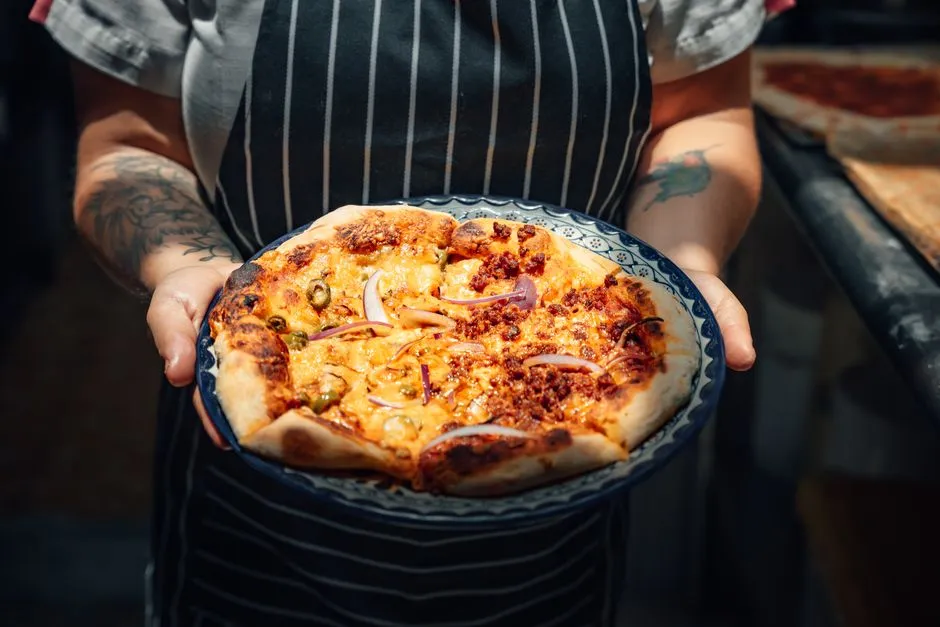
- How do you make pizza with leftover pulled pork?
- Start with the container, not the dough
- Check the pan and dough first
- Gather the ingredients for two pizzas
- Assemble and bake in the source's order
- What does the thermometer need to show?
- How do you keep the pork portion manageable?
- Should you add pickles, slaw or vinegar sauce?
- Protect against flour, allergy and heat hazards
- What happens to the leftovers afterward?
- Sources
How do you make pizza with leftover pulled pork?
Make pulled pork pizza with fully cooked pork whose storage history is known. Keep it at 40°F (4°C) or below, refrigerate within two hours or one hour above 90°F (32°C), and use within its original 3–4-day refrigerated window. Reheat the pork and finished leftovers to 165°F (74°C), measured with a food thermometer. A browned crust does not prove the topping is safe, and baking cannot rescue mishandled meat.
Start with the container, not the dough
Before planning toppings, identify when the pork was cooked, how promptly it was chilled, and whether it stayed refrigerated. A container labeled only “Sunday” leaves important questions unanswered. FoodSafety.gov gives cooked meat leftovers and pizza a refrigerated window of 3–4 days at 40°F (4°C) or below.
Our conservative planning rule is to retain the pork's original deadline when turning it into pizza. Do not assign older meat another full window because it now has a crust. If its history is unknown or it exceeded safe handling limits, discard it without tasting.
This source-led recipe guide uses one published pizza formula, with federal food-safety controls added explicitly. The Lone Crust Ledger has not kitchen-tested this version. It starts with cooked pulled pork; it is not a pork-shoulder smoking or raw-meat cooking lesson.
Check the pan and dough first
Use the baking-sheet option: choose a metal sheet rated for 500°F (260°C), following its instructions. This guide does not require transferring dough onto a hot stone. Follow the dough's storage and preparation directions; do not override an incompatible temperature requirement.
Gather the ingredients for two pizzas
Hormel Foods' Barbeque Pulled Pork Pizza supplies the following formula. Amounts use the source's US cup and spoon measures.
- 1 tablespoon olive oil
- 1 garlic clove, minced
- 1 pound pizza dough
- 1/2 cup barbecue sauce, plus extra for drizzling
- 2 cups cooked pulled pork
- 1 cup shredded cheddar
- 2 cups shredded mozzarella
- 1/2 small red onion, sliced
- 2 tablespoons chopped cilantro
- A little cornmeal for the baking sheet
Assemble and bake in the source's order
Heat the oven to 500°F (260°C). Dust the sheet with cornmeal. Combine oil and garlic; divide dough equally and stretch one portion to a 12-inch round.
Brush with half the oil mixture. Add half the sauce, half the pork, an extra sauce drizzle, half each cheese, then half the onion. Bake 7–10 minutes, looking for a lightly browned crust and bubbling cheese. Finish with half the cilantro. Repeat with the remaining ingredients.
That is the source's baking window, not a safety guarantee. The additional thermometer check below is required before serving leftover pork.
What does the thermometer need to show?
Check several substantial pieces of pork, especially near the center, with a clean food thermometer suitable for small portions; keep the probe off the pan. FoodSafety.gov specifies 165°F (74°C) for leftovers. Neither melted cheese nor an oven set to a high temperature establishes the temperature inside the meat.
If the crust browns before the pork reaches that endpoint, do not serve it based on appearance or elapsed time. Do not promise that adding minutes will preserve the crust's quality. Keep the safety decision separate from the texture result, and reconsider the topping distribution before another batch.
Handle cooked pork with clean utensils. Keep raw meat and its juices separate from the dough, cheese, sauce and ready-to-eat finishes. FDA's safe-handling guidance supports this separation and temperature-based checking.
How do you keep the pork portion manageable?
Separate the chilled shreds gently with clean utensils rather than leaving one compact mound. Portion only the amount being assembled and return the remaining chilled ingredients to the refrigerator. Do not spread everything on the counter while waiting for dough preparation.
Look at what your particular pork contains: loose cooking liquid, visible fat, firm bark, or sauce already mixed throughout. These are observations, not evidence that it is safe. Do not taste questionable pork to decide.
For flavor, our editorial preference is to avoid automatically adding a second heavy sauce coating when the pork is already sauced. The recipe includes a drizzle; it does not require an unmeasured pool. Changing the extra drizzle is a personal flavor adjustment, not a tested dryness cure or a substitute for the thermometer endpoint.
Unlike sliced brisket, pulled pork arrives as shreds that can be distributed among the other toppings. That practical difference matters more here than claiming every shoulder is juicier than every brisket.
Should you add pickles, slaw or vinegar sauce?
Treat these as optional, untested serving ideas, not additions to the recipe's bake instructions. Start by tasting a safely cooked slice on its own. If you want another flavor, try a small amount on your own plate rather than changing the whole pizza.
Our suggested comparison is plain slice versus a slice with drained ready-to-eat pickle. If you prefer slaw, serve a properly refrigerated, ready-to-eat portion alongside. Check its ingredients and handling instructions; slaw does not belong outside refrigeration indefinitely because the pizza is hot.
For a vinegar-forward variation, choose a ready-to-use barbecue sauce whose label and consistency suit the recipe. A thin vinegar dressing is not automatically an equivalent base sauce. No new sauce-making or preservation formula is implied.
Record which option you preferred. The regional-styles collection discusses regional influence; this combination makes no claim to be an official Texas recipe.
Protect against flour, allergy and heat hazards
Flour is raw food. FDA says not to taste uncooked dough or let children play with it. Wash hands and clean flour-contact equipment and surfaces before handling ready-to-eat food.
Check every ingredient for the diners' allergy needs. Ordinary wheat dough and the dairy cheeses introduce wheat and milk; prepared pork, sauces and finishes may add other allergens. FDA distinguishes ingredient labeling from allergen cross-contact. Removing a visible topping does not establish safety.
Keep children and pets away from the oven and hot-pan route. Use dry oven mitts, place hot equipment on a suitable heat-resistant surface and clean only after it cools. For an oven fire, keep the door closed and turn off the heat if safe; leave and call emergency services if the fire persists or you cannot act safely. Do not carry a burning pan or pour water on burning grease. Illinois Extension covers oven fires and burn prevention; USFA's cooking guidance also explicitly says not to move a pan during a grease fire.
What happens to the leftovers afterward?
Refrigerate promptly in shallow containers within two hours, or one hour above 90°F (32°C). Keep at 40°F (4°C) or below and retain the pork's earlier refrigerated limit. Count previous preparation and serving time; do not treat each move between kitchen and table as a fresh allowance.
Freeze promptly within the safe window when needed. Thaw in the refrigerator, not on the counter, and reheat to 165°F (74°C). FDA explains that some toxins produced during unsafe storage survive cooking. Smell, taste and appearance cannot certify safety.
For another cooked-meat topping with its own coherent dough recipe, see the BBQ chicken pizza guide. Keep each formula together rather than mixing its pan size, topping amounts and bake window with this one.
Sources
Read September 8, 2026: Hormel's pizza recipe; FoodSafety.gov's cold-storage and internal-temperature charts; FDA's handling, refrigeration, flour and allergen guidance; Illinois Extension and USFA cooking-fire guidance. Links appear beside the relevant claims. Flavor comparisons are labeled editorial suggestions; no testing, guaranteed results or commercial affiliation is claimed.